Most people shopping for a Daytona spend their time looking at dials, bezels, and movement specifications.
Weight rarely gets discussed until after the watch arrives.
Then suddenly it becomes one of the first things people notice.
The reason is simple. Weight affects how a watch feels every single second it’s on your wrist. It influences comfort, balance, wrist presence, and overall perception of quality.
That’s why experienced buyers often ask about weight before they ask about movement details.
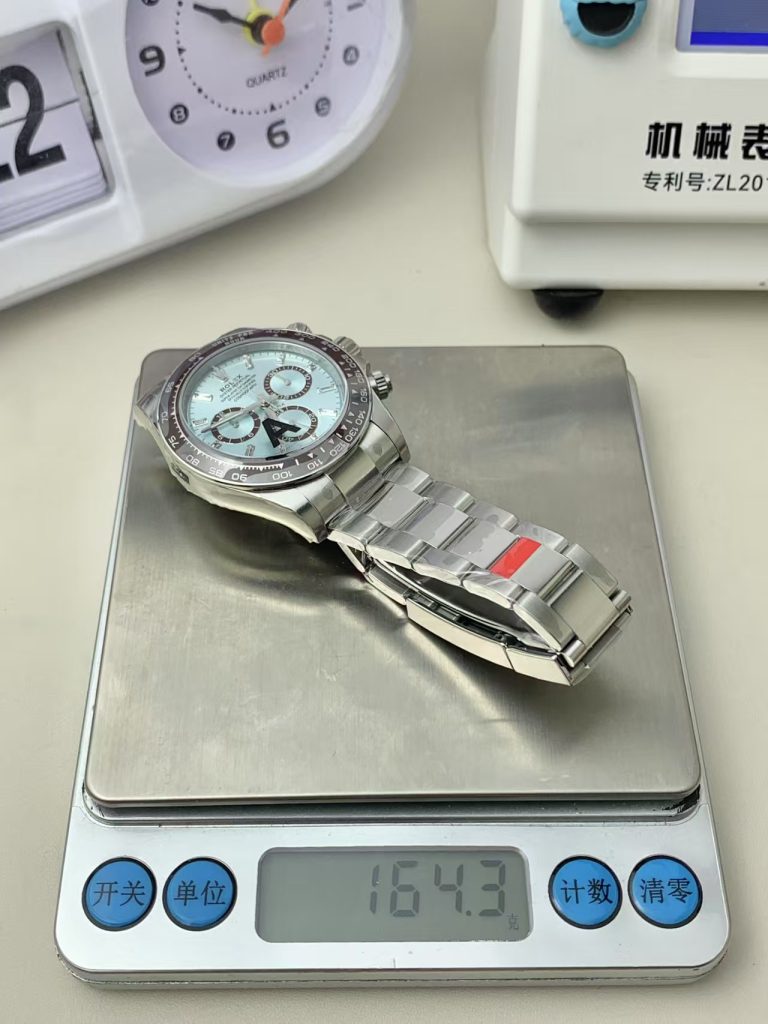
Daytona Weight Reference Chart
Weights are approximate and may vary slightly depending on bracelet sizing, links removed, production batch, and specific model variation.
Why Buyers Notice Weight Immediately
Most buyers can’t identify a clone movement by sound.
Most buyers can’t spot a slightly incorrect font.
Most buyers can’t tell whether a marker is 0.2mm off alignment.
They can absolutely tell when a watch feels unusually light or strangely balanced.
That’s because weight is not something you inspect.
It’s something you experience.
The moment a Daytona goes on your wrist, your brain starts forming opinions about quality based on feel.
A watch that feels too light often feels cheaper.
A watch that feels properly balanced tends to feel more convincing.
That reaction happens automatically.
Weight Alone Doesn’t Tell The Whole Story
One mistake newer buyers make is assuming heavier always means better.
That’s not how it works.
A watch can be extremely heavy and still feel uncomfortable.
A watch can also be relatively light and feel fantastic.
The key is balance.
A well-balanced Daytona distributes weight naturally across the wrist. The case doesn’t feel top-heavy. The bracelet doesn’t pull awkwardly. Everything works together.
That’s why experienced collectors usually talk about wrist presence rather than simply weight.
Why Modern Daytona Super Clones Improved
A few years ago, weight differences were one of the easiest ways to identify weaker replicas.
The watches often felt noticeably lighter than genuine examples.
Bracelets felt hollow.
Clasps felt thin.
The overall watch lacked substance.
Modern super clone watches improved significantly in this area.
Factories started paying much closer attention to:
- bracelet construction
- clasp design
- case density
- material selection
- overall weight distribution
The result is that many modern Daytona super clones now sit surprisingly close to genuine references in terms of overall wrist feel.
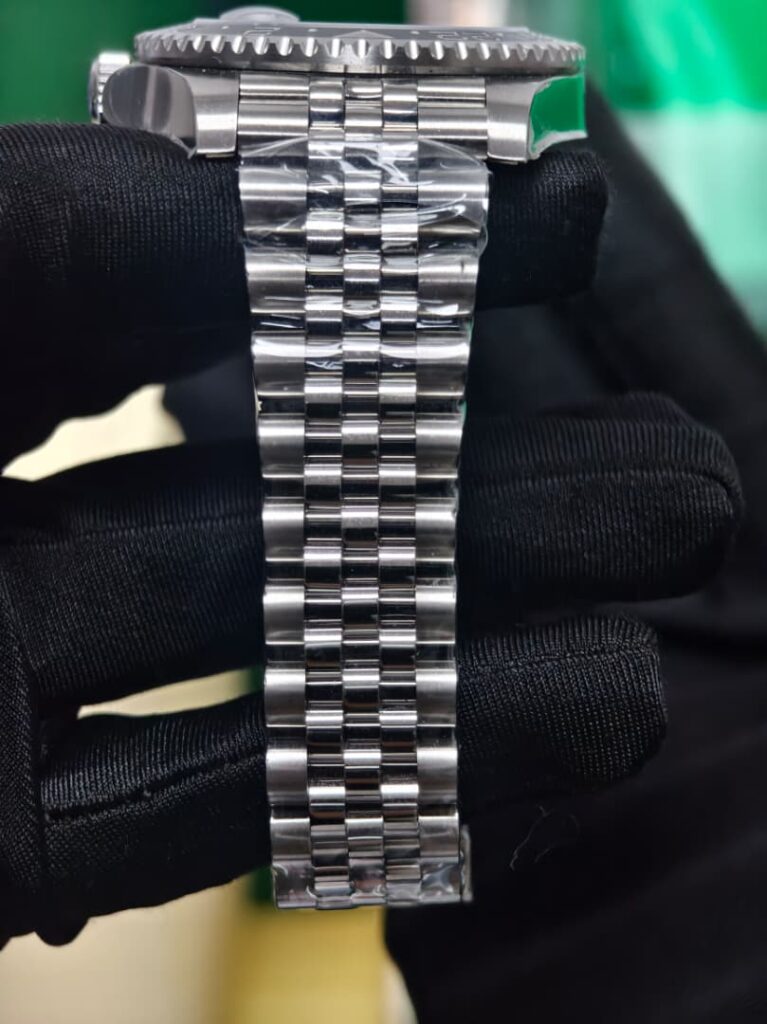
The Bracelet Affects Weight More Than People Think
When buyers compare Daytona weights, they often focus entirely on the watch head.
That’s only part of the equation.
The bracelet contributes a huge percentage of total weight.
A weak bracelet can make a watch feel dramatically different even if the case weight is accurate.
That’s why higher-end factories spend so much effort refining bracelet construction.
Better tolerances.
More accurate finishing.
Stronger clasp assemblies.
Correct link proportions.
Those details affect how the weight is distributed across the wrist.
Why Weight Matters In Daily Wear
Most people only think about weight during the first few minutes of ownership.
Then comfort becomes more important.
This is where balance starts mattering.
An accurate weight figure means very little if the watch constantly shifts around while wearing it.
A Daytona that feels planted and stable on wrist usually leaves a stronger impression than a watch that simply matches a specification sheet.
That’s one reason experienced buyers focus heavily on real-world reviews before ordering.
Sites like SuperCloneReps.com often discuss wrist feel, bracelet construction, and overall wearability because those details tell buyers much more than a raw weight number ever could.
What Experienced Buyers Actually Compare
When experienced buyers compare Daytona models, they rarely ask:
“How much does it weigh?”
Instead they ask:
- Does it feel balanced?
- How does the bracelet feel?
- Is the clasp solid?
- Does the watch sit comfortably?
- Does it feel substantial without feeling bulky?
Those questions usually provide a better picture of ownership experience than weight alone.
Final Thoughts
Weight is one of the first things people notice when they put a Daytona on their wrist.
It’s also one of the most misunderstood specifications in the watch world.
A heavier watch isn’t automatically better.
A lighter watch isn’t automatically worse.
What matters is how the watch feels during actual daily wear.
That’s why experienced buyers pay attention not only to weight, but also to bracelet construction, clasp quality, balance, and overall wrist presence.
Because long after the specifications are forgotten, those are the details you’ll still notice every time you wear the watch.