











Audemars Piguet Royal Oak Super Clone Watches
The Royal Oak is one of those watches people think they understand until they actually handle one. In photos it mostly looks like a steel sports watch with screws on the bezel. Then you see how the light moves across the case and bracelet in person and suddenly the entire obsession starts making more sense.
The bracelet is really the whole watch.
People talk about the dial, the bezel shape, the movement, but the bracelet is what separates a convincing Royal Oak from a replica that immediately feels wrong. Cheap versions never get the taper and flexibility right. Either the links feel stiff, or the bracelet turns too loose after a few wears and loses that smooth draping effect AP bracelets are known for.
The brushing matters more than almost anything else too. A Royal Oak depends heavily on finishing because the case design is so angular. Lower-end factories usually over-polish everything, and the watch starts looking shiny instead of sharp. Better versions keep the transitions between brushed and polished surfaces cleaner, which changes the entire feel on wrist.
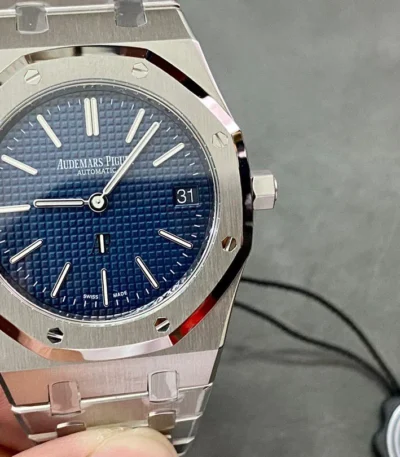
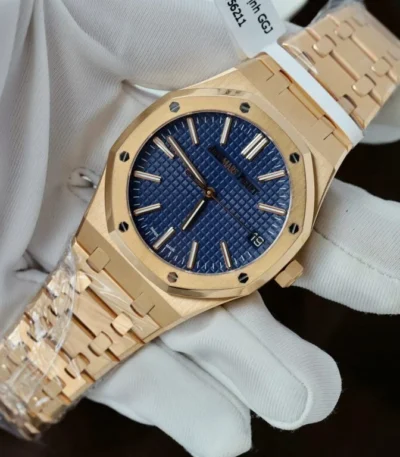
Blue dials still dominate for obvious reasons. AP basically built half the modern Royal Oak reputation around that blue tapisserie dial. The problem is that it’s also one of the easiest ways to spot a weak replica. Cheap dials lose depth immediately under indoor lighting and start looking flat or overly purple.
Black dials are usually safer. Less reflective, easier to wear daily, fewer chances for factories to get the texture wrong. White dials can look excellent too, although they expose flaws faster because every marker and hand stands out harder against the lighter background.
The bezel screws are another thing experienced buyers notice immediately. Alignment matters. On weaker replicas the screws can sit unevenly or the slots point in random directions, and once you see it, your eye keeps going back there constantly.
Case thickness changes everything on a Royal Oak too. The genuine watch wears thinner than most people expect when they finally try one on. Cheap replicas often add unnecessary thickness and suddenly the watch loses that sharp integrated look completely.
One thing people don’t realize until wearing a Royal Oak daily is how much the watch reflects light. Every edge catches something. Some people love that constantly changing look. Others eventually realize it attracts more attention than they actually wanted.
The newer clone movements are much smoother than older Royal Oak replicas used to have. Earlier versions felt rough when winding and the rotors could sound terrible in quiet rooms. Better factories cleaned most of that up over the last few years.
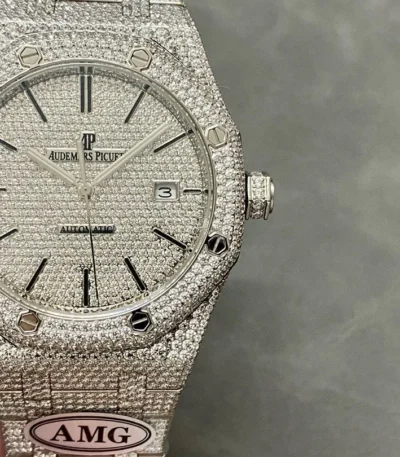
If someone’s buying their first Royal Oak clone, stainless steel with a blue or black dial is still probably the safest move. The louder versions can look impressive online, but the cleaner configurations are usually where factories put their best finishing work.