One of the quickest ways to tell the difference between a first-time buyer and someone who’s been doing this for years is how they look at QC photos.
New buyers usually zoom straight into the dial.
Experienced buyers usually start somewhere else.
Not because the dial isn’t important.
Because they’ve learned that some of the things that look impressive in photos end up mattering very little once the watch is on the wrist. And some of the things buyers ignore during QC become impossible to stop noticing after delivery.
That’s why QC photos matter.
They’re not there to convince you to approve the watch.
They’re there to help you decide whether you’d be happy wearing it six months from now.
Most Buyers Look For Perfection
That’s usually the first mistake.
They start zooming in.
Then they zoom in again.
Then they spend twenty minutes comparing individual markers against screenshots from genuine watches.
Eventually every watch starts looking flawed.
The reality is much simpler.
You’re not looking for a perfect watch.
You’re looking for problems that will actually bother you during ownership.
There’s a huge difference.
Start With The Whole Watch
Before checking anything else, look at the watch without zooming.
Seriously.
Just look at it.
Does anything immediately feel off?
Does the watch look balanced?
Does the bezel line up naturally?
Do the markers look straight?
Does the bracelet sit correctly against the case?
Most major issues reveal themselves surprisingly quickly.
The longer you spend staring at individual pixels, the easier it becomes to miss the bigger picture.
Check The Bezel First
There’s a reason experienced buyers always talk about bezel alignment.
Once you see a crooked bezel, you can’t stop seeing it.
The dial might distract you for a few days.
The bezel won’t.
Look at the 12 o’clock marker.
Now look directly below it.
Do they line up naturally?
Don’t measure.
Don’t overthink it.
Your eye will usually tell you immediately if something looks wrong.
If you’re forcing yourself to find an issue, there probably isn’t one.
Date Windows Deserve Attention
Date windows cause more rejected QC photos than almost anything else.
Sometimes for good reasons.
Sometimes not.
The biggest mistake buyers make is judging the date based on a single number.
One date tells you very little.
Try to see multiple dates if possible.
Numbers like:
often reveal alignment patterns quickly.
You’re looking for consistency.
Not perfection.
A date that sits naturally in the center of the window is usually all that matters.
The Bracelet Usually Gets Ignored
Which is funny.
Because after the watch arrives, the bracelet becomes one of the things buyers notice most.
People spend thirty minutes checking dial printing and ten seconds looking at the bracelet.
That’s backwards.
Look at the clasp.
Look at the gaps between links.
Look at how the bracelet connects to the case.
Does everything appear clean and even?
A weak bracelet can make a great watch feel average very quickly.
Crystal Quality Is Easier To Spot Than People Think
Most buyers don’t pay much attention to the crystal during QC.
They should.
A poor crystal affects the entire watch.
Look at reflections.
Look at clarity.
Look at how the dial appears through the crystal.
Good crystals almost disappear.
Weak crystals constantly remind you they’re there.
This becomes especially noticeable outdoors once the watch is being worn regularly.
Don’t Become Obsessed With The Rehaut
This will upset some collectors.
But it’s true.
The rehaut matters.
It just doesn’t matter as much as many buyers think.
If the engraving is noticeably misaligned, that’s worth noting.
If you’re zooming to 500% trying to decide whether one letter sits slightly left of center, you’re probably wasting your time.
The watch is going on your wrist.
Not under a microscope.
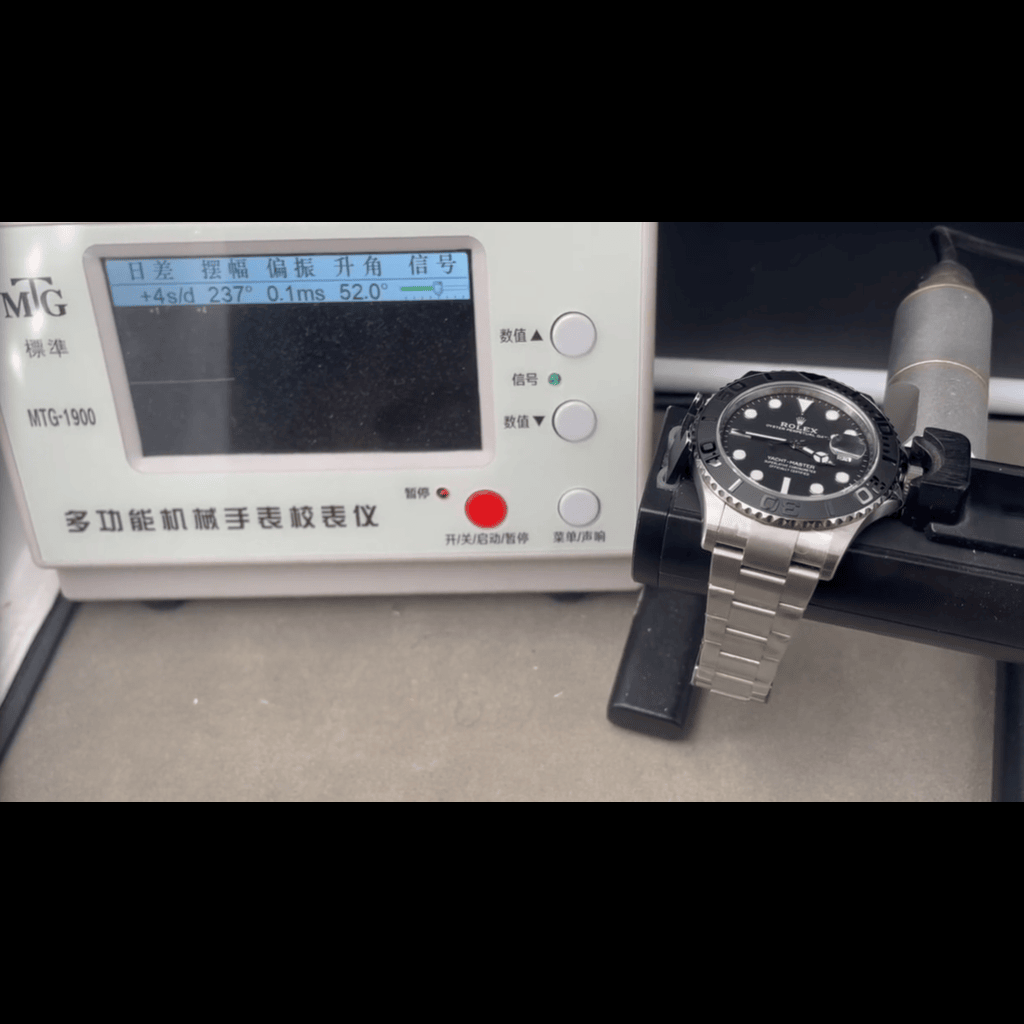
Watch The QC Video
The video often tells you more than the photos.
Photos show appearance.
Videos show behavior.
You can check:
Some watches photograph beautifully but feel completely different once they’re moving.
Never skip the video if it’s available.
Ask The Question Experienced Buyers Ask
This is probably the best QC advice you’ll ever receive.
Instead of asking:
“Can I find a flaw?”
Ask:
“Would I notice this during normal wear?”
That one question eliminates a huge amount of unnecessary stress.
Most buyers reject watches for flaws they’d never notice in real life.
Meanwhile, they approve watches with issues they’ll see every day.
What Actually Matters After Delivery
The funny thing about QC photos is that buyers often focus on the wrong things.
Six months later they’re usually talking about:
The bracelet.
The movement.
The crown feel.
The crystal.
The comfort.
Not whether a marker was half a millimeter different from a genuine example.
Ownership changes priorities.
Experienced buyers know this because they’ve already gone through it.
The Goal Isn’t To Find Reasons To Reject
A lot of buyers approach QC like an investigation.
They’re hunting for problems.
That’s not really the point.
The point is making sure the watch meets your expectations.
If the watch looks balanced, the major alignments are correct, and nothing immediately stands out, that’s usually a good sign.
Most of the time, the watches people enjoy wearing aren’t the ones with perfect QC photos.
They’re the ones without any issues significant enough to notice once they’re actually on the wrist.
Final Thoughts
QC photos are one of the most useful parts of the buying process.
They’re your opportunity to inspect the watch before it ships and catch anything that might affect long-term enjoyment.
The key is knowing what matters.
Check the bezel.
Check the date.
Check the bracelet.
Check the crystal.
Watch the video.
Then step back and look at the watch as a whole.
Because once the package arrives, that’s exactly how you’ll experience it.
Not zoomed in.
Not measured.
Just worn.









Recent Comments